Amazon FBA
Published by Nunu on 16.06.26
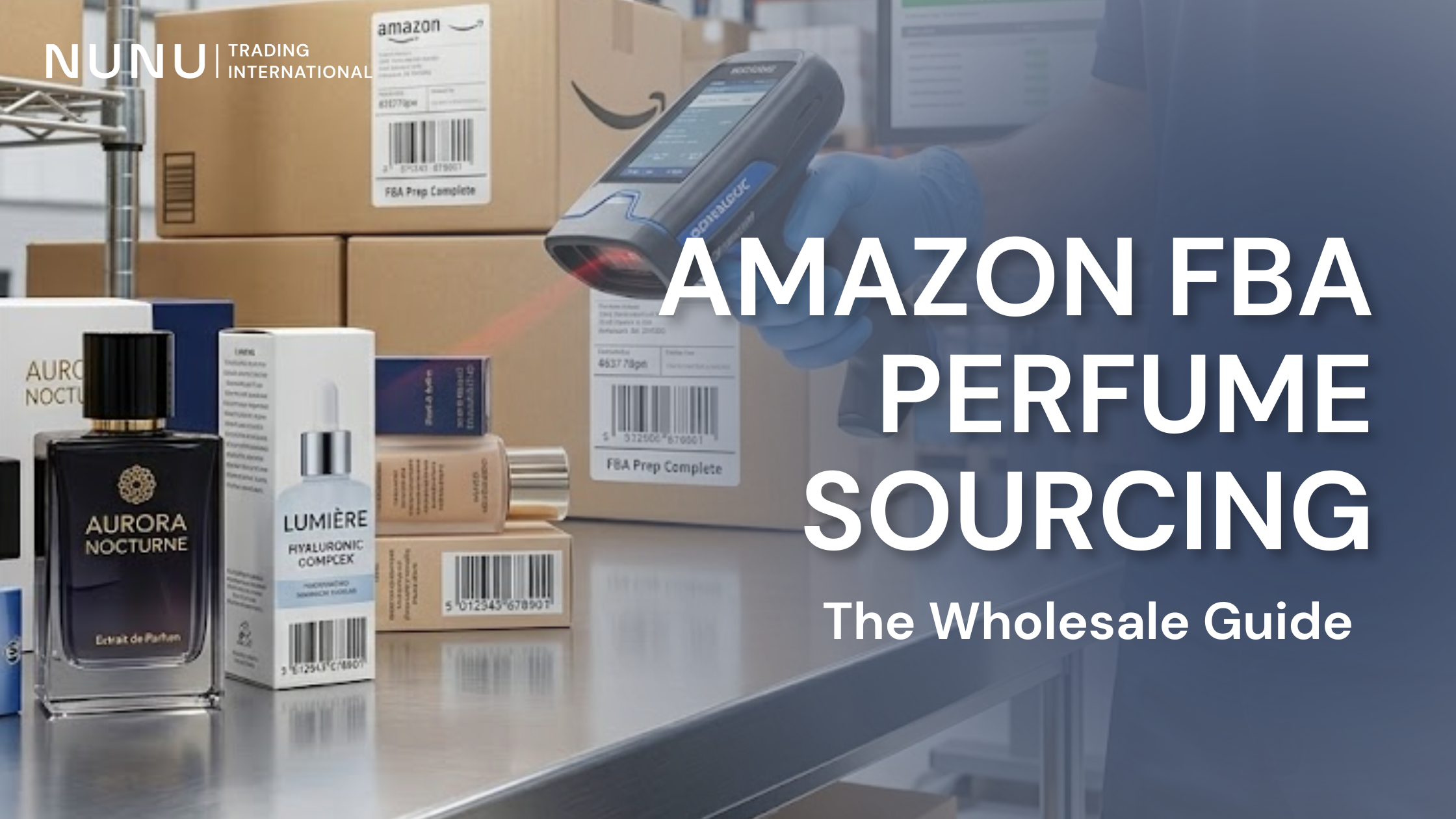
Perfumes remain one of the most consistently profitable sub-categories within Amazon Beauty — high price points, strong brand loyalty, and a gifting calendar that drives demand all year round. For sellers running FBA, the opportunity is real. But it comes with a catch: perfume is also one of the categories where Amazon enforces its strictest authenticity and catalogue-matching rules, and where a single sourcing mistake can mean a suppressed listing, a failed shipment plan, or a suspended account.
This guide breaks down what Amazon FBA perfume sourcing actually involves: why the beauty category continues to perform, the documentation Amazon expects from sellers and suppliers (EAN codes, B2B invoices, proof of authenticity), how to use a live stock file to plan replenishment without overstocking or running out, and the sourcing mistakes that quietly cost sellers their rankings — or their accounts.
In perfumery on Amazon, your supplier is not just a price — it is your documentation, your authenticity proof, and your replenishment engine.
Why the Beauty Category Is Profitable on Amazon
Beauty, and perfumery in particular, continues to be one of the strongest categories on Amazon for a simple reason: it combines high unit value with low shipping volume, strong existing brand demand, and a purchase pattern that repeats.
- Favourable value-to-size ratio: a 100 ml fragrance can retail for €40–€120 while occupying a fraction of the space of bulkier categories, keeping FBA storage and fulfilment fees proportionally low against the sale price.
- Built-in demand from established brands: shoppers search by brand and reference name, reducing the need for heavy advertising investment to generate traffic.
- Repeat-purchase behaviour: signature fragrances generate recurring orders, supporting predictable revenue once a listing is ranking well.
- Seasonal demand peaks: Christmas, Valentine’s Day, Mother’s and Father’s Day, and Black Friday all drive significant spikes in fragrance sales, rewarding sellers who plan stock in advance.
- A self-limiting competitive landscape: because Amazon requires brand approval and authenticity documentation to sell in this category, approved sellers compete in a market with fewer unverified, low-price competitors.
Amazon’s Requirements: EAN Codes, B2B Invoicing, and Authenticity
Before a perfume can be listed — or shipped to an FBA warehouse — it has to clear three checkpoints that Amazon takes seriously: catalogue matching, brand approval, and proof of a legitimate supply chain.
- EAN/GTIN matching: Amazon’s catalogue matches new listings to existing product data using the EAN/GTIN code. If the EAN on your product doesn’t match the brand’s registered data, you’ll face listing errors, “this item doesn’t match” rejections, or unexpected item issues when FBA receives your shipment.
- Brand approval (ungating) in Beauty: to list perfumes from a controlled brand, sellers typically need to request approval and provide invoices from authorised suppliers, usually dated within the last 365 days, showing supplier details, your company information, and product references that match the ASIN.
- Authenticity complaints and Plans of Action: if a buyer or brand files an authenticity complaint, Amazon will ask for invoices proving the products were sourced legitimately. Receipts without a supplier’s VAT number, address, and itemised references are routinely rejected.
- Document discipline: keep invoices organised per batch and supplier, ideally cross-referenced to EAN codes, so they’re ready the moment Amazon asks — not scrambled together after a listing is already suppressed.
The table below summarises what each Amazon checkpoint asks for and why a compliant B2B supplier matters:
| Amazon Checkpoint | What You Must Provide | Why Your Supplier Matters |
|---|---|---|
| Catalogue matching | EAN/GTIN that matches the brand’s registered data | EAN codes must align with official retail catalogue data to avoid mismatches |
| Brand approval (ungating) | Invoices from an authorised supplier, dated within 365 days | Invoices must show supplier details, your business data, and ASIN-matching references |
| Authenticity complaint | Itemised B2B invoices with VAT number and address | Informal receipts are rejected; only proper B2B invoicing survives a Plan of Action |
How to Use a Stock Offer File to Plan FBA Replenishment
One of the biggest operational risks in FBA is the gap between what a supplier’s website says is “in stock” and what’s actually sitting in their warehouse. For perfumes — where lead times and minimum batch sizes matter — that gap turns into stockouts, rushed shipments, or capital tied up in slow-moving SKUs.
- What a usable stock offer file should contain: EAN codes, current available quantity, unit price by volume tier, and a clear “last updated” date — not a static catalogue PDF.
- Build a simple reorder trigger: combine your average daily sales velocity with your supplier’s typical dispatch and transit time, add a safety margin, and use that number as your reorder point for each ASIN.
- Cross-check against Amazon’s own replenishment data: compare your supplier’s real stock file with Amazon’s Restock recommendations in Seller Central to spot, in advance, which SKUs are at risk of running out before your next shipment arrives.
- Prioritise by availability, not just by price: if a reference shows declining stock at your supplier, place that order first — even if a slightly better price is available elsewhere with a longer lead time.
- Plan shipments in batches: a reliable stock file lets you consolidate orders into fewer, larger FBA shipments, reducing per-unit inbound costs and the frequency of shipment plan creation.
Nunu Trading publishes exactly this kind of file: a downloadable Stock Offer in Excel format, updated almost daily with real warehouse quantities and EAN codes.
Common Mistakes FBA Sellers Make When Sourcing Perfumes
Most sourcing problems in this category aren’t caused by bad luck — they’re caused by skipping steps that feel optional until Amazon enforces them.
- Ordering based on “in stock” labels without verification, then discovering the units aren’t available when it’s time to create the shipment plan.
- Working with suppliers who can’t issue proper B2B invoices, which becomes a serious problem the moment a brand approval application or authenticity complaint requires documentation.
- Skipping EAN verification before sending inventory to FBA, leading to “unexpected item” rejections and delayed receiving at the fulfilment centre.
- Splitting the same ASIN across multiple unverified suppliers, creating inconsistent batches and increasing the risk of issues if products are commingled.
- Underestimating lead times, which leads to stockouts — and Amazon’s algorithm penalises listings that go out of stock, even temporarily, with lasting effects on ranking.
- Chasing the lowest unit price without checking total landed cost, replenishment reliability, or documentation — a cheaper unit price means little if it results in a suspended listing.
Why Nunu Trading Is Built for Amazon FBA Sellers
Nunu Trading was designed as a B2B-first wholesale platform for perfumery and cosmetics, with the operational details that Amazon FBA sellers specifically need:
- Authenticity & EAN matching: every product is 100% original, sourced through verified channels, with EAN codes that match official retail catalogue data — exactly what’s needed for brand approval applications and to avoid catalogue mismatches.
- B2B invoicing for Amazon documentation: invoices are issued with your registered business details, suitable for authenticity Plans of Action and brand approval requests, with intra-community VAT exemption available for EU-registered businesses.
- A real Stock Offer file: the Nunu Trading catalogue is available as a downloadable Excel file, updated almost daily with real warehouse quantities and EAN codes — built to be used for replenishment planning, not just browsing.
- Fast, predictable logistics: orders dispatch within 24–48 hours within Spain and 48–72 hours across the EU, managed through TSB (pallets) and GLS (parcels), so your FBA shipment plans run on a schedule you can rely on.
The minimum order is €300, with no hidden thresholds, and the full catalogue — perfumery, skincare, makeup, and haircare — is accessible with wholesale pricing and live stock quantities upon B2B registration. Explore the full list of brands we carry.
Ready to Plan Your Next FBA Replenishment?
Download the Nunu Trading Stock Offer Excel file — real EAN codes, live quantities and wholesale pricing — and register your free B2B account to start sourcing with confidence.
Published by Nunu Trading — Wholesale Perfumery & Cosmetics Distributor, Europe.